
For decades, football clubs have tried to solve growth and cash-flow gaps through the same limited tools: ticket sales, sponsorship renewals, media deals, and transfers. The problem is structural. Clubs are emotionally powerful brands, but commercially fragile businesses. Revenue is seasonal. Performance is volatile. Debt piles up. Investors hesitate.
But this month, something very different happened in Spain.
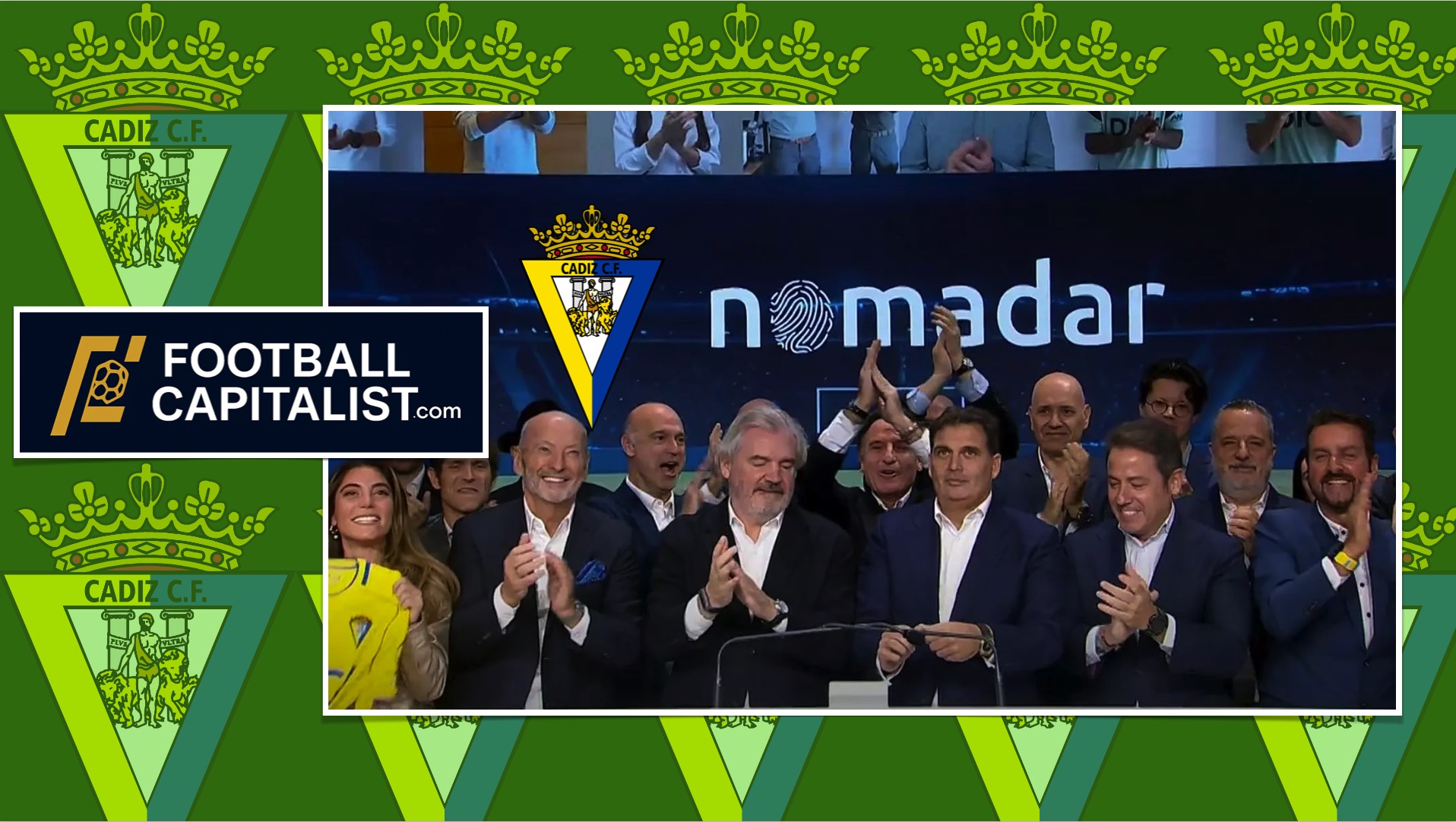
A second-division club just tapped the U.S. capital markets—raising approximately $300 million—without selling the club.
And that move may signal the next era of football finance.
The Cádiz Play: Listing the Ecosystem, Not the Team
Cádiz Club de Fútbol SAD didn’t go to Wall Street to sell equity in the club itself.
Instead, it listed its innovation and real estate development arm, Nomadar USA (Nasdaq: NOMA).
Nomadar controls the project development for a Sports & Technology City in El Puerto de Santa María. The development includes:
- A stadium project
- A hotel and hospitality complex
- A technology and data innovation hub
- Sports-business incubator infrastructure
By listing Nomadar—not the club license itself—Cádiz separated:
| Volatile Asset | Stable/Scalable Asset |
|---|---|
| Team performance, matchday revenue, league status | Real estate, sports-tech services, recurring rentals, data IP |
This structural separation is the breakthrough.
Why This Matters
Football clubs need capital to expand and modernize. But traditional investors dislike:
- Relegation risk
- Wage inflation
- Unpredictable sporting outcomes
Cádiz bypassed that barrier.
By taking the real estate + tech ecosystem public, not the club, they secured long-term funding without exposing sporting identity.
This is a blueprint that other clubs can follow.
Football is Becoming an Ecosystem Business
The winners of the next era won’t be the clubs who simply buy talent and sell talent.
They will be the clubs who build and monetize ecosystems.
Future-proof clubs will operate more like:
- Real estate developers
- Tech incubators
- Community campus operators
- Education, research, and hospitality networks
The football team becomes the cultural magnet — the emotional centerpiece — but not the sole business engine.
Cádiz just showed how to structure that engine.
What This Means for Investors
This model aligns with what institutional capital actually wants:
| Investor Preference | How Cádiz Matched It |
|---|---|
| Predictable revenue | Real estate + tech services |
| Asset-backed structures | Campus & infrastructure development |
| Scalable growth beyond match attendance | Regional + digital ecosystem expansion |
| Preservation of club identity | No sale of majority sporting control |
This is the cleanest bridge between football culture and capital markets sophistication we have seen in Spain outside the giants.
A Turning Point for European Football Finance
Cádiz is not a superclub.
It is not operating with sovereign wealth backing.
It is not one of the global elite.
And this makes the move more significant.
It signals that the next wave of transformation in European football may not be driven by the Premier League or private equity megadeals—but by smart mid-sized clubs using:
- Corporate structuring
- Asset-class segmentation
- Public-market access
Instead of selling history, badge, and identity to external ownership.
The Takeaway
Cádiz has demonstrated:
- Clubs are no longer just teams; they are platforms.
- The future of football finance is ecosystem-driven development, not transfer speculation.
- Growth capital will increasingly come from public markets, not wealthy owners.
The next competitive edge in European football is not just tactical or scouting intelligence.
It is capital structure intelligence.
And those who master it early will define the business side of the sport for the next 20 years.
Football Capitalist will continue tracking which clubs and ownership groups begin mirroring this approach. The early movers will have a powerful advantage: sustainable expansion, global reach, and independence.
The sport has just entered its next phase.