
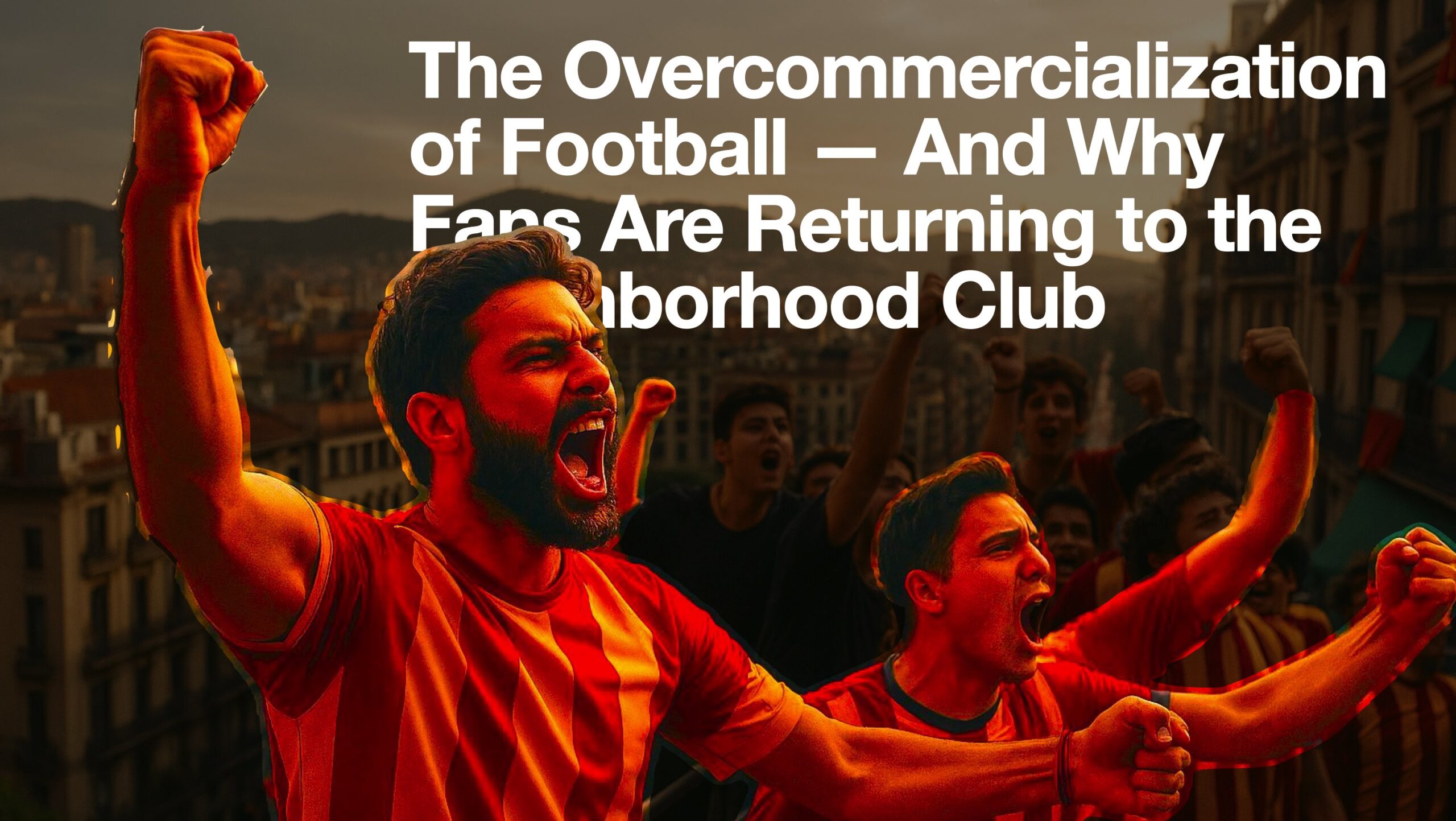
How rising commercialization, inflated matchday costs, and diluted club identity are pushing fans back to grassroots football, fueling the comeback of neighborhood and barrio clubs worldwide.
Football has never been more global, more corporate, or more commercially engineered. Private equity, mega-brand partnerships, international tours, and premium ticketing have reshaped the game’s financial engine. Yet this economic evolution has created an unexpected counter-movement: fans worldwide are rediscovering the authenticity of local football culture.
Supporters who once centered their identity around mega-clubs are turning back to the small neighborhood teams — the clubs in the “hood,” the barrios, the working-class districts — where football still feels local, emotional, and real.
Why Fans Are Connecting Less With Big Clubs
From a cultural and economic perspective, the reasons are clear:
- Escalating ticket prices have made matchday inaccessible to the same communities that built club culture.
- Overbranding and global repositioning have weakened the connection between clubs and their local identities.
- Corporate stadium experiences often feel more like entertainment events than football atmospheres.
- Commercial saturation across broadcasts and digital platforms has replaced raw passion with polished content.
The result: a widening emotional gap between elite clubs and their original fanbase.
The Rise of Grassroots Football and Neighborhood Clubs
As big-club football leans deeper into commercialization, local teams deliver something the major leagues cannot replicate: authentic football culture.
Neighborhood clubs offer:
- True community involvement
- Affordable match experiences
- Real access to players, coaches, and staff
- Youth development and local talent pathways
- A sense of identity that global clubs no longer provide
These clubs are not just teams — they’re cultural anchors.
Why This Movement Matters (The FootballCapitalist.com View)
This is not a rejection of the modern game. It’s a balancing act.
The football economy is evolving into a dual system:
1. The Global Commercial Football Engine
Fuelled by broadcast rights, international markets, celebrity athletes, and multi-national fanbases.
2. The Local Football Identity Economy
Fueled by authenticity, community pride, and neighborhood-driven club culture.
One drives revenue.
The other drives meaning.
Both will shape football’s next decade.
For investors, club owners, and football entrepreneurs, understanding this shift is crucial. Culture is becoming a competitive advantage — and grassroots football is the space where that culture is strongest.
The Bottom Line
Football grew upward and outward.
Now it’s growing back into the streets, fields, and neighborhoods that made the sport what it is.
Fans are not just supporting local clubs — they’re reclaiming them.