
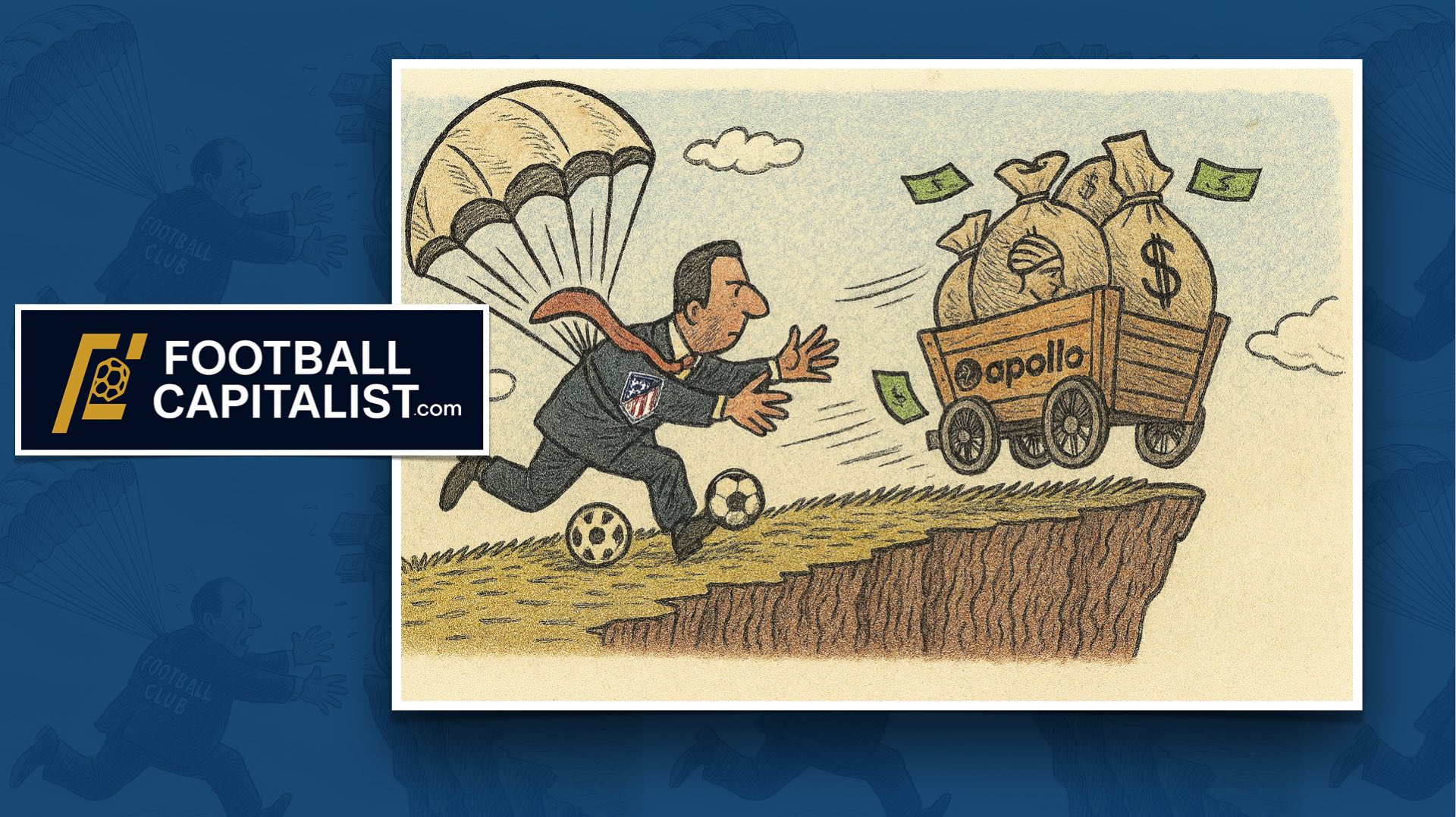
Apollo Sports Capital is acquiring a majority stake (55%) in Club Atlético de Madrid, valuing the club at approximately €2.2 billion — one of the largest transactions in LaLiga history.
But what really stands out isn’t just the club itself. The deal will also fund the Ciudad del Deporte, a mixed-use district next to the Metropolitano that will feature offices, retail, hotels, and entertainment. This signals something bigger: Apollo isn’t simply buying a football club — it’s investing in the broader ecosystem that surrounds it.
Sports Investment Is Evolving
As club valuations continue to rise, owning a team on its own is becoming less attractive for institutional capital. High entry prices, limited exit options, and the unpredictable nature of sporting results make it difficult to generate strong returns purely from on-field performance.
This is why the next wave of sports investment is increasingly focusing on what happens around the club: the infrastructure, real estate, media rights, and entertainment assets that generate recurring, diversified cash flows.
We’re already seeing this shift in action:
- Inter Miami CF’s Freedom Park blends a stadium with hotels, restaurants, and public green space.
- Real Madrid C.F.’s Santiago Bernabéu has been redeveloped to host concerts, events, and corporate activations year-round.
- Tottenham Hotspur Football Club has transformed its stadium into a multi-purpose entertainment complex.
These examples show that clubs are no longer just sports assets — they are platforms, anchored by a team but monetized across multiple verticals.
The Next Wave: Clubs as Anchors for Entire Ecosystems
The real value in modern sports investment will come from the broader ecosystem, not just what happens on the pitch. Teams become anchors for real estate, media, hospitality, retail, and entertainment operations — creating integrated hubs where fans, tourists, and businesses intersect.
Apollo’s acquisition of Atlético Madrid feels like an early example of this shift. Instead of just buying a club, they’re building a sports city, a platform that blends competition, commerce, and culture.
In a market where club valuations continue to soar, the future of sports investment will likely focus less on winning trophies and more on winning ecosystems.