
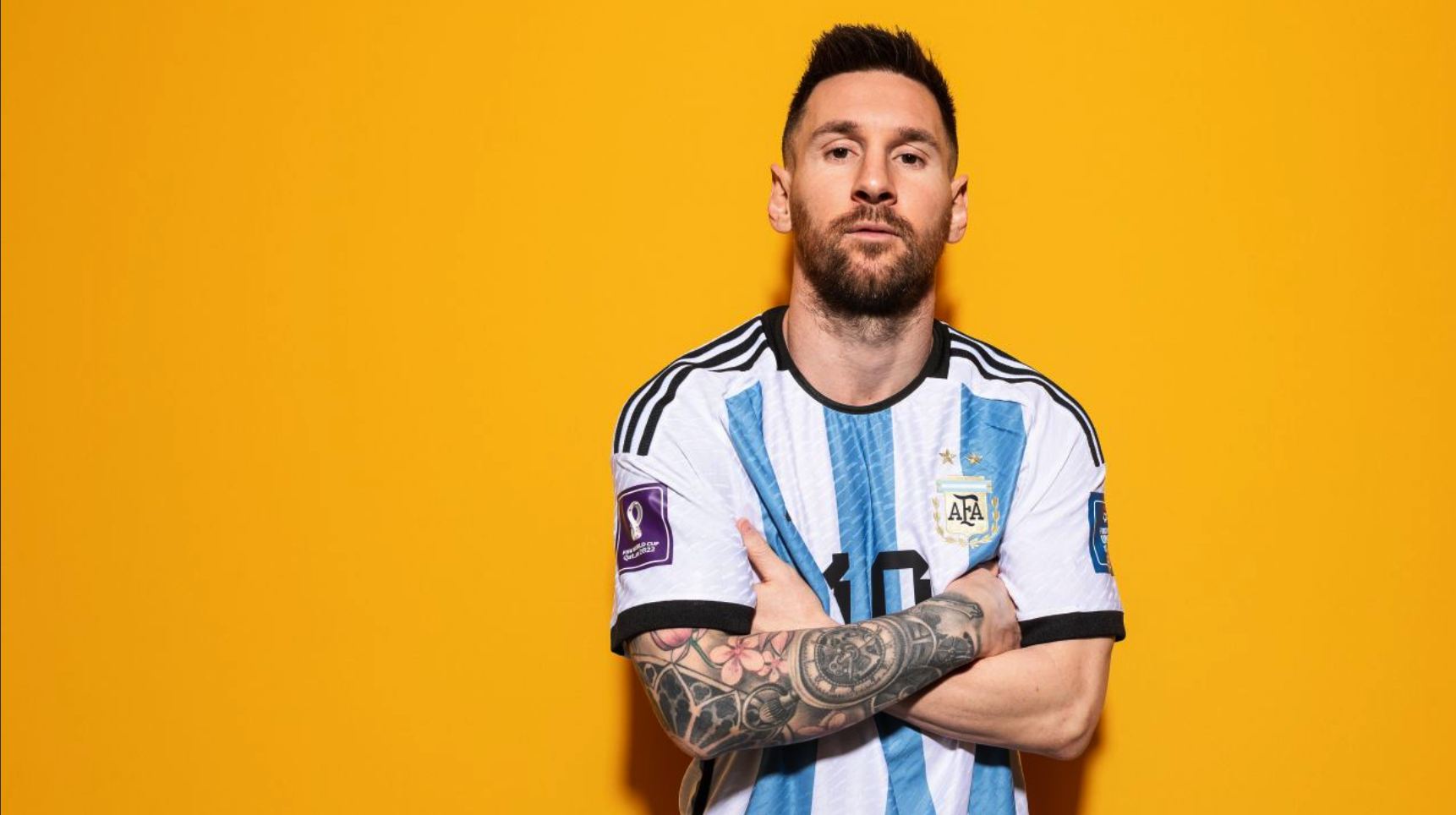
The Business Shockwave No One Saw Coming
Lionel Messi’s purchase of UE Cornellà — a fifth‑division club in metropolitan Barcelona — is not a sentimental homecoming or a celebrity hobby. It is a market‑moving event that signals the emergence of a new football asset class: globally scalable local clubs.
For decades, lower‑tier football in Spain has operated on thin margins, municipal subsidies, and community loyalty. Messi’s entry injects something the ecosystem has never seen at this level:
- elite‑tier capital
- global brand equity
- commercial leverage
- institutional credibility
This is not a football story. This is a business transformation story.
1. The New Economics of Visibility
The football industry has quietly entered a new era where attention is the most valuable currency. Messi’s acquisition proves that a club’s competitive tier no longer limits its commercial ceiling.
A fifth‑division club can now become a global brand in 24 hours.
This is the same dynamic that reshaped retail, music, and entertainment: distribution has been democratized.
And in football, distribution is now social.
2. CEO Insight: The Visibility‑to‑Value Pipeline
“We are witnessing a trend that has only just begun, still in its infancy. Local clubs now possess the power to become globally recognized through a single social post — that is a fact, and it is the new reality. When that visibility is maneuvered with intention, it becomes a highly valuable asset.” — Mark Lugo, CEO, Football Media Group
This is the core thesis: visibility → relevance → monetization → valuation.
Lower‑tier clubs are no longer geographically constrained. They are digitally scalable assets.
3. Why Messi’s Move Is a Business Case Study
Messi did not buy Cornellà for nostalgia. He bought it because the fundamentals are strong:
- Location advantage — 15 minutes from Barcelona, a global football capital
- Youth‑development pedigree — a proven pipeline producing top‑flight players
- Undervalued asset — relegations depressed valuation, creating a buy‑low opportunity
- Brand adjacency — Messi’s name alone multiplies commercial potential
This is a classic undervalued‑asset acquisition: Acquire low, inject brand equity, professionalize operations, scale globally.
4. The Messi Effect: Five Market Transformations
A. Capital Will Flow Down the Pyramid
Lower‑tier football has been capital‑starved for decades. Messi’s move changes investor psychology overnight.
Expect:
- private equity interest
- global sponsors entering Tercera and Segunda RFEF
- valuation uplift across Catalonia
This is the beginning of down‑market capital migration.
B. Youth Development Becomes a Profit Center
Cornellà already produces elite talent. With Messi’s backing, the academy becomes:
- a recruitment magnet
- a talent‑export engine
- a scalable revenue line
Youth development is no longer a cost center — it is a strategic asset.
C. Media Rights Will Fragment and Expand
A fifth‑division match involving Cornellà now has:
- international media value
- streaming potential
- global fan engagement
This is unprecedented. Lower‑tier football is becoming content, not just competition.
D. Institutional Pressure Will Force Modernization
Messi’s presence forces the RFEF to confront long‑ignored issues:
- infrastructure standards
- officiating quality
- competition management
- digital modernization
The federation must evolve or be overtaken by market forces.
E. A New Ownership Model for Global Icons
Cristiano Ronaldo bought 25% of Almería. Messi now owns Cornellà.
This is not coincidence. It is the beginning of a superstar‑driven ownership wave.
Lower‑tier clubs are becoming:
- entry points
- incubators
- brand platforms
- multi‑club network nodes
Football’s power structure is decentralizing.
5. Catalonia Becomes the New Football Innovation Hub
Messi’s acquisition strengthens Catalonia’s position as Europe’s most dynamic football ecosystem.
Cornellà becomes:
- a development hub
- a commercial platform
- a global brand in waiting
Barcelona now has a third competitive pole after FC Barcelona and RCD Espanyol.
6. The Multi‑Club Future: Messi’s Global Architecture
Messi is now involved in:
- UE Cornellà (Spain)
- Deportivo LSM (Uruguay)
- Leones de Rosario FC (Argentina)
This is the early blueprint of a global multi‑club network, but unlike City Football Group or Red Bull, Messi’s model is talent‑centric, not corporate‑centric.
Cornellà becomes the European anchor.
7. Strategic Forecast for Investors and Operators
Short‑Term (0–24 months)
- Sponsorship uplift
- Infrastructure upgrades
- Youth recruitment spike
- Brand expansion
Mid‑Term (2–5 years)
- Promotion to Segunda RFEF becomes realistic
- Academy becomes a top‑five non‑LaLiga system
- Multi‑club integration begins
Long‑Term (5–10 years)
- Cornellà reaches Primera Federación
- Messi’s network becomes a global talent pipeline
- Lower‑tier football becomes investable at scale
Conclusion: Messi Didn’t Buy a Club — He Bought the Future
Messi’s acquisition of UE Cornellà is a market signal. It marks the beginning of a new era where:
- local clubs become global assets
- visibility becomes currency
- youth development becomes scalable
- lower‑tier football becomes investable
This is not a trend. This is the birth of a new football economy.